The jumping off discussion area for the rest of the Deck. All things Lakewood.
Please check out our other sections. As we refile many discussions from the past into
their proper sections please check them out and offer suggestions.
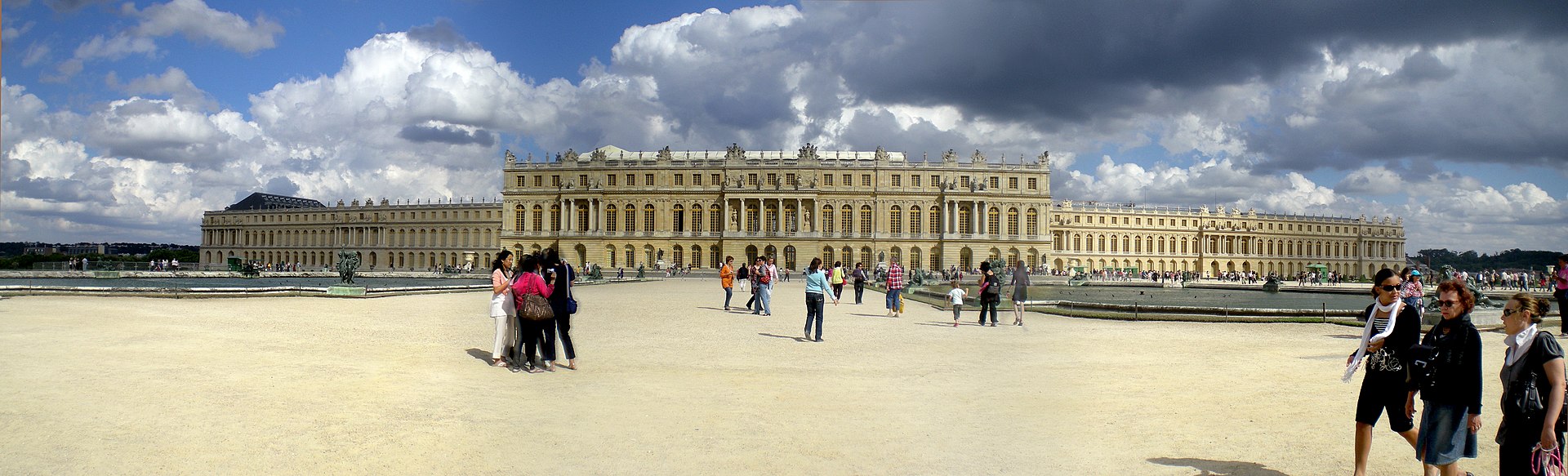
When the château was built, Versailles was a country village; today, however, it is a wealthy suburb of Paris, some 20 kilometres (12 miles) southwest of the French capital. The court of Versailles was the center of political power in France from 1682, when Louis XIV moved from Paris, until the royal family was forced to return to the capital in October 1789 after the beginning of the French Revolution. Versailles is therefore famous not only as a building, but as a symbol of the system of absolute monarchy of the Ancien Régime. (wikipedia)
Many see the building of the Château Versailles as the beginning of the end for Louis XIV of France, and sparked the French Revolution. Moving the center of French Politics to the newly built, over the top summer location, finally made people of France ask if their government was out of control. It would seem they had squandered everything, including the very future of France by outspending even liquidating key French assets to build it. What came out of the revolution was "modern democracy."
I have a feeling this bit of history could come into future discussions.
Of course "Les Miserables" is not about the French Revolution but a small student insurrection that was swatted down, on the run up to the French Revolution. However the government's over reaction to this and other insurrections, and the government consistently over reaching and ignoring the residents lead to the end of their regime, with demand for government to go back to serving the residents instead of shaking them dry for their own plans, benefiting only themselves.
.
Jim O'Bryan
Lakewood Resident
"The very act of observing disturbs the system." Werner Heisenberg
"If anything I've said seems useful to you, I'm glad.
If not, don't worry. Just forget about it." His Holiness The Dalai Lama
Declaration of the Rights of Man and of the Citizen
Articles:
Article I - Men are born and remain free and equal in rights. Social distinctions can be founded only on the common good.
Article II - The goal of any political association is the conservation of the natural and imprescriptible rights of man. These rights are liberty, property, safety and resistance against oppression.
Article III - The principle of any sovereignty resides essentially in the Nation. No body, no individual can exert authority which does not emanate expressly from it.
Article IV - Liberty consists of doing anything which does not harm others: thus, the exercise of the natural rights of each man has only those borders which assure other members of the society the enjoyment of these same rights. These borders can be determined only by the law.
Article V - The law has the right to forbid only actions harmful to society. Anything which is not forbidden by the law cannot be impeded, and no one can be constrained to do what it does not order.
Article VI - The law is the expression of the general will. All the citizens have the right of contributing personally or through their representatives to its formation. It must be the same for all, either that it protects, or that it punishes. All the citizens, being equal in its eyes, are equally admissible to all public dignities, places and employments, according to their capacity and without distinction other than that of their virtues and of their talents.
Article VII - No man can be accused, arrested nor detained but in the cases determined by the law, and according to the forms which it has prescribed. Those who solicit, dispatch, carry out or cause to be carried out arbitrary orders, must be punished; but any citizen called or seized under the terms of the law must obey at once; he renders himself culpable by resistance.
Article VIII - The law should establish only penalties that are strictly and evidently necessary, and no one can be punished but under a law established and promulgated before the offense and legally applied.
Article IX - Any man being presumed innocent until he is declared culpable, if it is judged indispensable to arrest him, any rigor which would not be necessary for the securing of his person must be severely reprimanded by the law.
Article X - No one may be disturbed for his opinions, even religious ones, provided that their manifestation does not trouble the public order established by the law.
Article XI - The free communication of thoughts and of opinions is one of the most precious rights of man: any citizen thus may speak, write, print freely, except to respond to the abuse of this liberty, in the cases determined by the law.
Article XII - The guarantee of the rights of man and of the citizen necessitates a public force: this force is thus instituted for the advantage of all and not for the particular utility of those in whom it is trusted.
Article XIII - For the maintenance of the public force and for the expenditures of administration, a common contribution is indispensable; it must be equally distributed between all the citizens, according to their ability to pay.
Article XIV - Each citizen has the right to ascertain, by himself or through his representatives, the need for a public tax, to consent to it freely, to know the uses to which it is put, and of determining the proportion, basis, collection, and duration.
Article XV - The society has the right of requesting account from any public agent of its administration.
Article XVI - Any society in which the guarantee of rights is not assured, nor the separation of powers determined, has no Constitution.
Article XVII - Property being an inviolable and sacred right, no one can be deprived of private usage, if it is not when the public necessity, legally noted, evidently requires it, and under the condition of a just and prior indemnity.
more to come...
Those who forget history are forced to repeat history.
.
Jim O'Bryan
Lakewood Resident
"The very act of observing disturbs the system." Werner Heisenberg
"If anything I've said seems useful to you, I'm glad.
If not, don't worry. Just forget about it." His Holiness The Dalai Lama
Versailles would be a marvelous location for the City of Paris to move their city hall and rec center. The City of Lakewood should build the equivalent. But, where?